

Beyond the Lab: What We’re Learning from Lactate Testing
Testing our continuous lactate sensors
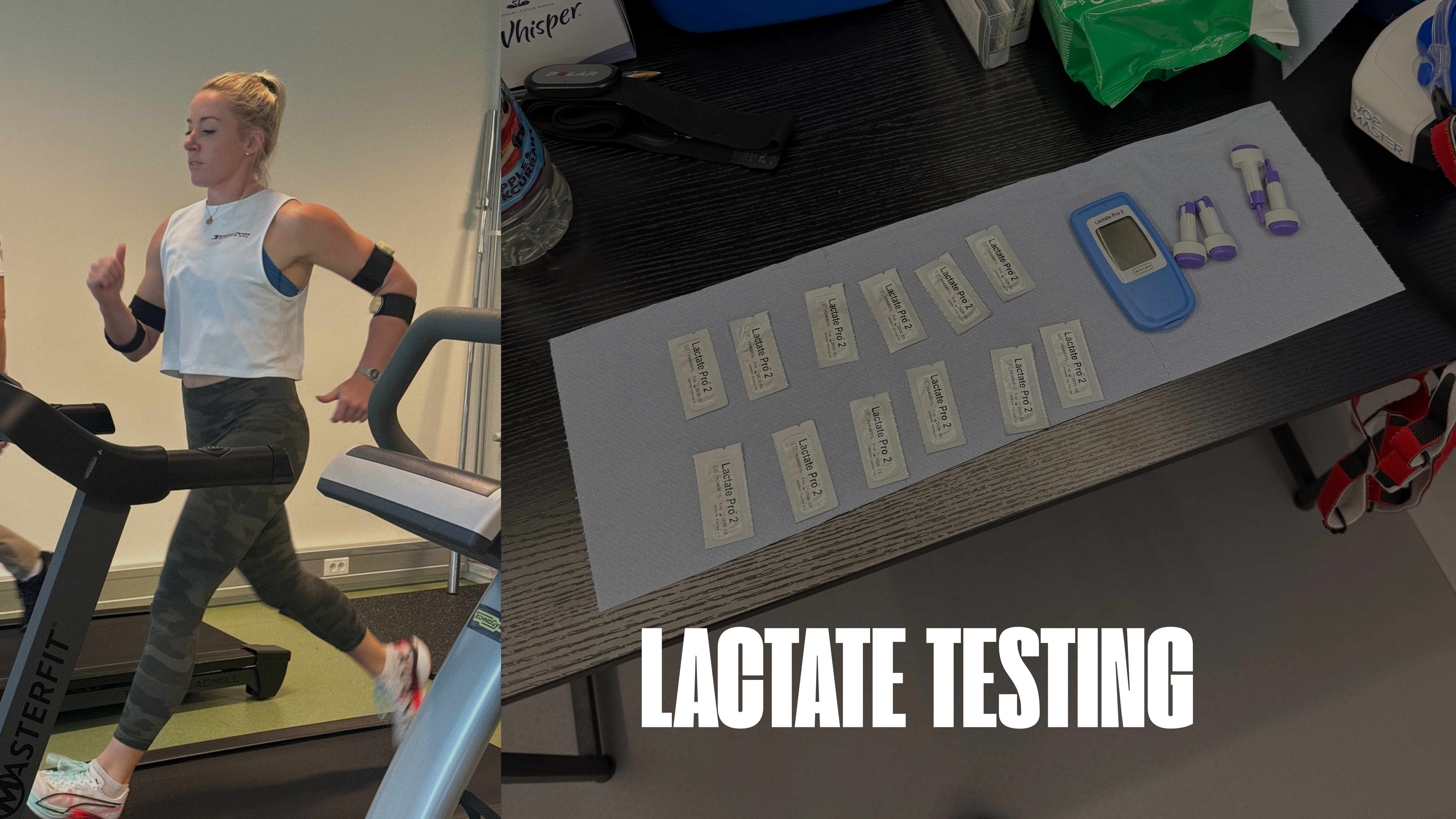
Over the past few months, we’ve been deep in testing our sensors, with a particular focus on lactate, not just in controlled lab settings, but out on a 400 m track where athletes actually train and race. Lactate is one of the most powerful markers of intensity and metabolic stress, and it’s central to our goal of helping athletes train by physiology rather than guesswork.
In the lab, we’re running structured step tests and taking finger-prick samples to build precise baselines. This gives us clean data on how lactate rises with controlled increases in workload and helps us validate the accuracy of our sensors. But controlled conditions only tell part of the story.
So we’ve taken the testing outside too. Running laps of a 400 m track and comparing our sensor readings with finger-prick tests taken after each rep shows us what really happens when pace fluctuates, when fatigue accumulates, and when environmental factors like wind, heat and hydration come into play.
Combining these two approaches, lab precision and real-world variability, is helping us build the next generation of continuous lactate sensing. The more data we collect, the clearer it becomes that athletes need more than heart rate and more than occasional finger-pricks. They need continuous insight into the internal changes that determine pacing, fatigue and threshold.
This work is shaping how our sensors detect and interpret lactate minute by minute so athletes can finally see what’s happening under the hood, not just estimate it.
More updates coming soon as we continue to test, refine and unlock what real-time physiology can do for performance.