

Built to Be Pushed
Why CrossFit and Hyrox Are the Ultimate Stress Test for the Performr Band
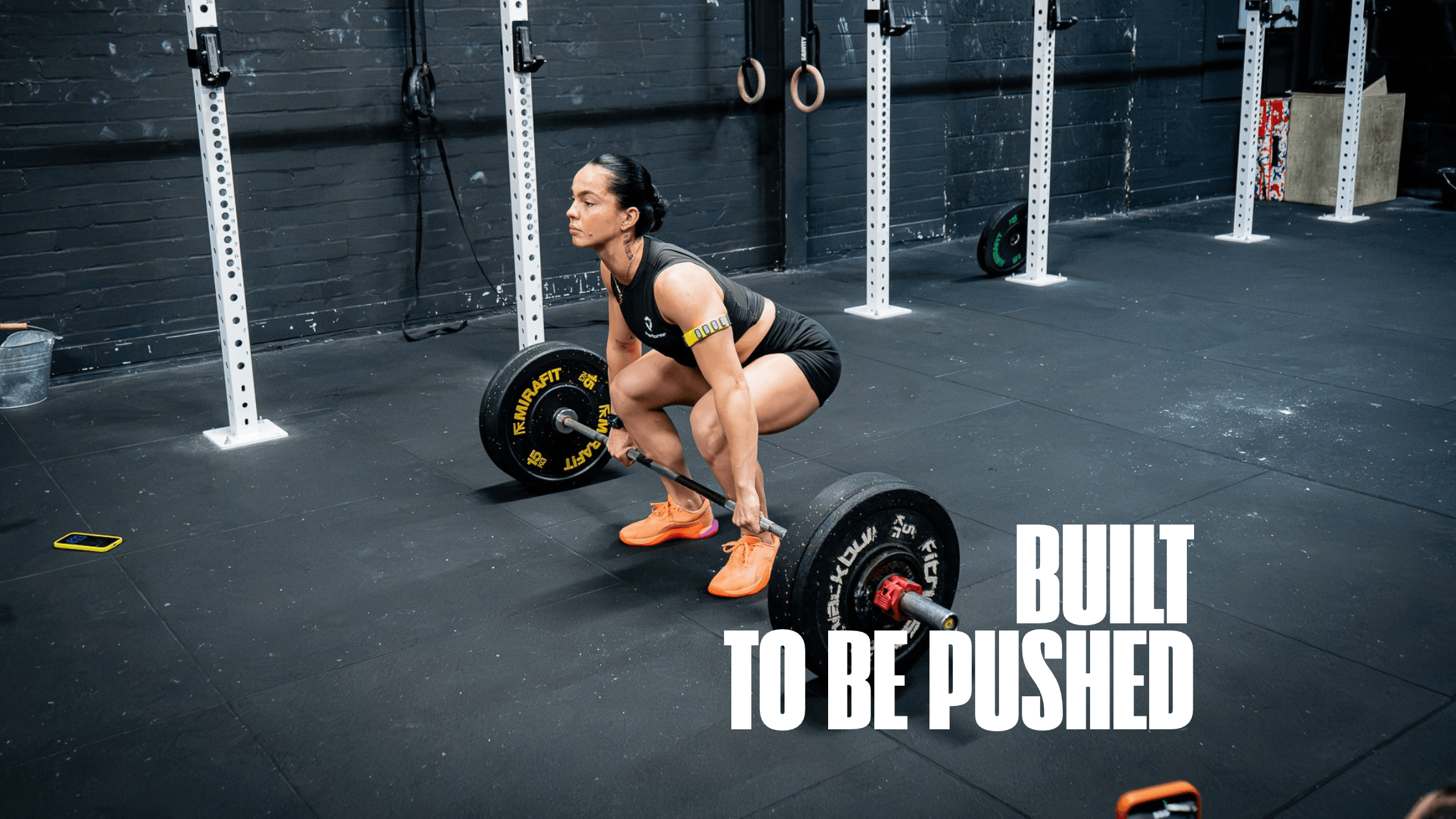
If you want to know whether a wearable really works, don't just test it on a treadmill. Test it on someone hanging from a rope, slamming a wall ball overhead, dragging a sled and then sprinting straight into a row. That's exactly what we've been doing with HYROX elite 15 athlete Liam McCroary and CrossFit athlete Jodie Ferguson, two athletes who put the Performr band through the kind of sessions that expose every weakness a device can have.
Meet the testers
Liam is no stranger to the band. Having already raced a full HYROX wearing it earlier this year, he's been back in training, giving us a direct comparison between versions under the same brutal demands.
Jodie brings a different set of challenges. An incredible Crossfit athlete, her sessions pile on the kind of gymnastics, lifting and high-skill movements that test the band in ways running and sled work never will.
Why range of movement matters
Most wearables are designed around a narrow set of motions, usually running and cycling, where the arm moves in a steady, predictable way. CrossFit and hybrid training throw that out entirely. In a single session, the band might face:
Overhead work: wall balls, snatches and handstands that raise the arm and shift the muscles underneath the sensor.
Grip and hanging: pull-ups, toes-to-bar, rope climbs and farmers carries that tense the forearm and change blood flow.
Impact: burpees, box jumps and lunges that jolt the band repeatedly.
Pushing and pulling: sled work, rowing and SkiErg that flex and extend the arm under load.
Sweat, and lots of it: long, intense efforts that soak the skin the sensors rely on.
Each of these can nudge the band or alter the local conditions the sensors read. If the signal stays clean through all of it, we can be confident it will stay clean almost anywhere.
Why the intensity matters too
Mixed-modality training doesn't just move the body in every direction; it moves the biomarkers too. Heart rate and lactate surge on a sled push, dip slightly during a transition, then climb again on the next station. Fluid loss builds across the session and fuel use shifts as the effort goes on. For a continuous, multi-analyte device, that's the perfect test: can it follow fast, repeated swings in real time, rather than just the slow, steady rise of an easy run?
What they told us
The feedback from both Liam and Jodie has been clear: the band is comfortable, and they hardly feel it, even through overhead work, hanging, burpees and heavy carries. For a device designed to be worn through the toughest sessions, that's exactly what we want to hear.
They were also quick to point out how it compares with the usual way of tracking lactate. Getting a reading today normally means stopping mid-session for a finger-prick blood test, again and again. Wearing a band they barely notice is far more comfortable, and it doesn't interrupt the work.
Every session and every piece of feedback goes straight back into development: how the band sits, how it's secured, and how we keep it comfortable when the movement gets chaotic.
Tested where it counts
A wearable earns trust by surviving the hardest conditions, not the easiest. CrossFit and hybrid training pack almost every movement pattern and intensity swing into a single session, making them the ideal proving ground. A huge thank you to Liam and Jodie for pushing the Performr band, and themselves, to the limit. Every rep is making the band better for everyone who wears it next.
Want to stay on top of posts like this — and be among the first to see what continuous, multi-marker monitoring can reveal? Join the Performr waitlist to keep up with the latest insights, product news and training science from the team.