

Continuous Lactate Sensing Is Changing the Game
Why continuous lactate matters
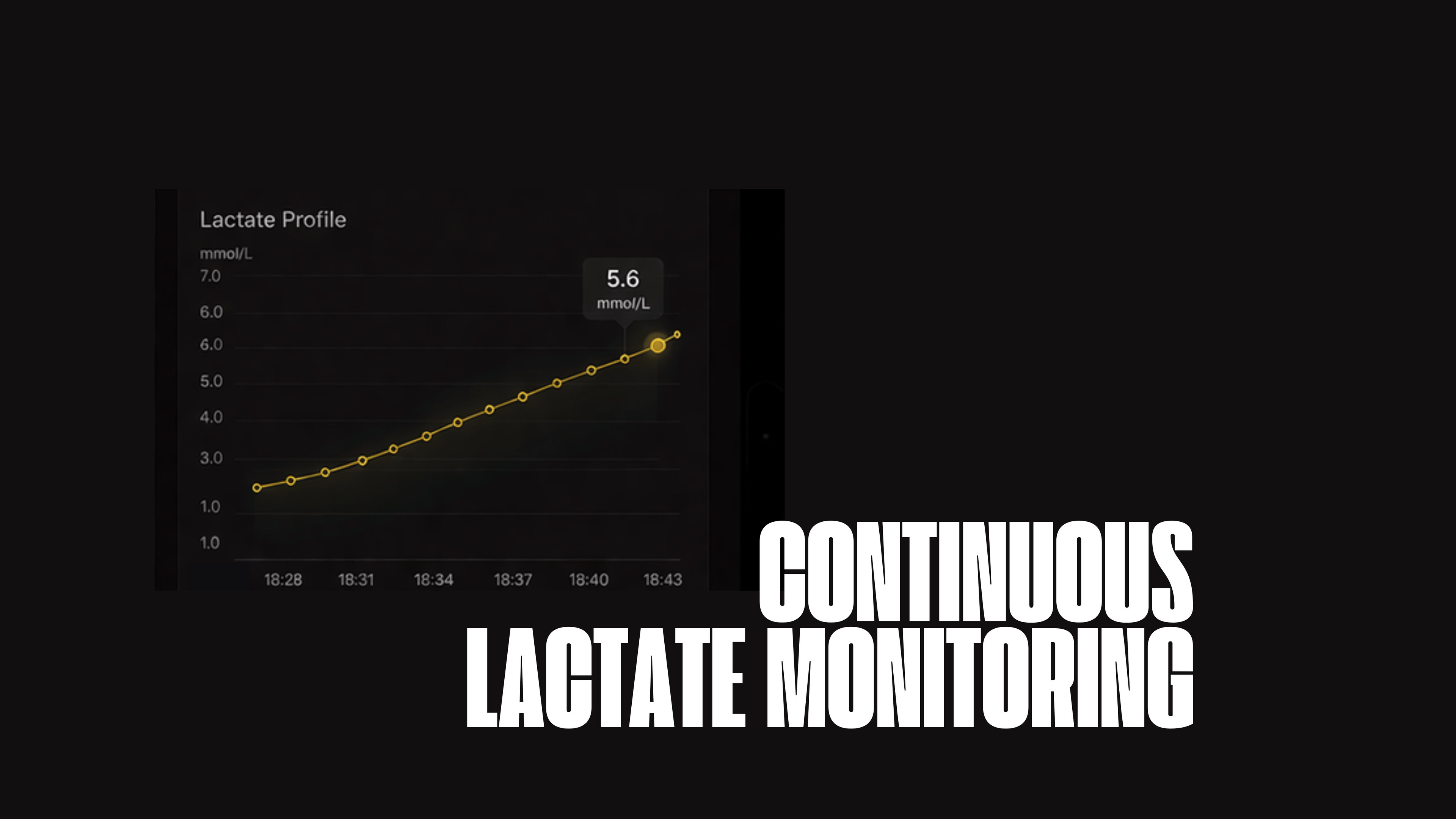
Lactate has long been one of the most powerful indicators of performance, fatigue, and metabolic stress. For decades, coaches, clinicians, and elite athletes have relied on lactate measurements to understand training intensity and physiological thresholds. However, traditional lactate testing methods have limited how often and how easily that data can be used.
Most lactate measurements today rely on finger/ear prick blood testing. While effective, this approach has clear drawbacks. It can be uncomfortable and invasive. It interrupts training sessions. It requires consumables such as test strips and lancets. It produces single time point readings rather than continuous insight. And over time, repeated testing becomes costly and impractical for frequent monitoring. Not to mention, even experts find contamination of samples a challenge - further exacerbating the other issues.
Continuous lactate sensing changes that model entirely.
Instead of isolated snapshots, continuous monitoring provides a dynamic picture of how lactate levels rise, stabilise, and recover over time. This transforms lactate from a laboratory metric into a real world performance tool.
Why Continuous Lactate Data Matters
Lactate is not just a marker of effort. It reflects how the body is producing and utilising energy. When measured continuously, it provides insight into:
Training intensity and threshold zones
Metabolic efficiency
Real time fatigue development
Recovery speed after intervals
Readiness for the next training session
With finger/ear prick testing, you might measure lactate once or twice during a session. You get isolated values that require interpretation and guesswork about what happened between samples. Continuous sensing reveals the full curve, showing exactly when lactate begins to accumulate, how quickly it rises, and how efficiently it clears.
That curve tells a far more complete story.
From Snapshot Testing to Performance Intelligence
Pin prick blood testing can confirm whether an athlete reached a threshold. Continuous lactate sensing shows how long they sustained it, how steep the accumulation rate was, and how quickly recovery began.
This shift enables smarter decisions, such as:
Adjusting interval duration in real time
Preventing overtraining before excessive accumulation occurs
Identifying improved clearance as a sign of adaptation
Determining true recovery status before the next session
Better dosing of training stimulus, particularly in the context of climatic variables or altitude
Instead of reacting to fatigue after it impacts performance, athletes and coaches can proactively manage load and recovery.
Less Invasive, More Practical, More Scalable
Continuous lactate sensing removes many of the barriers associated with traditional testing. There is no repeated finger pricking, no blood handling, and no interruption of training flow. That means:
Greater comfort
Easier adoption across broader populations
Lower long term consumable costs
More consistent data collection
Because the process is streamlined, lactate monitoring can move beyond elite labs and into daily training environments.
Recovery and Preparedness
One of the most valuable aspects of continuous lactate data is insight into recovery. How quickly lactate clears after high intensity effort reflects metabolic conditioning and readiness. Slow clearance may indicate residual fatigue, insufficient recovery, or the need to adjust workload. Faster clearance can signal improved adaptation and preparedness for the next session.
Pin prick testing makes it difficult to monitor these trends consistently. Continuous data makes recovery measurable, not subjective.
The Future of Lactate Monitoring
Lactate has always been one of the most meaningful metrics in performance science. What has been missing is accessibility and continuity. Continuous sensing turns lactate from an occasional laboratory measurement into a powerful everyday performance signal.
By removing the pain, mess, cost, and inconvenience of repeated blood sampling, and by replacing isolated readings with continuous insight, lactate monitoring becomes not just a diagnostic tool, but a strategic advantage.
The shift from intermittent testing to continuous biochemical intelligence has the potential to redefine how athletes train, recover, and prepare for what comes next.