

Do You Really Need a Glucose Gel During a Hyrox Race?
What continuous glucose data reveals about fuelling high-intensity competition
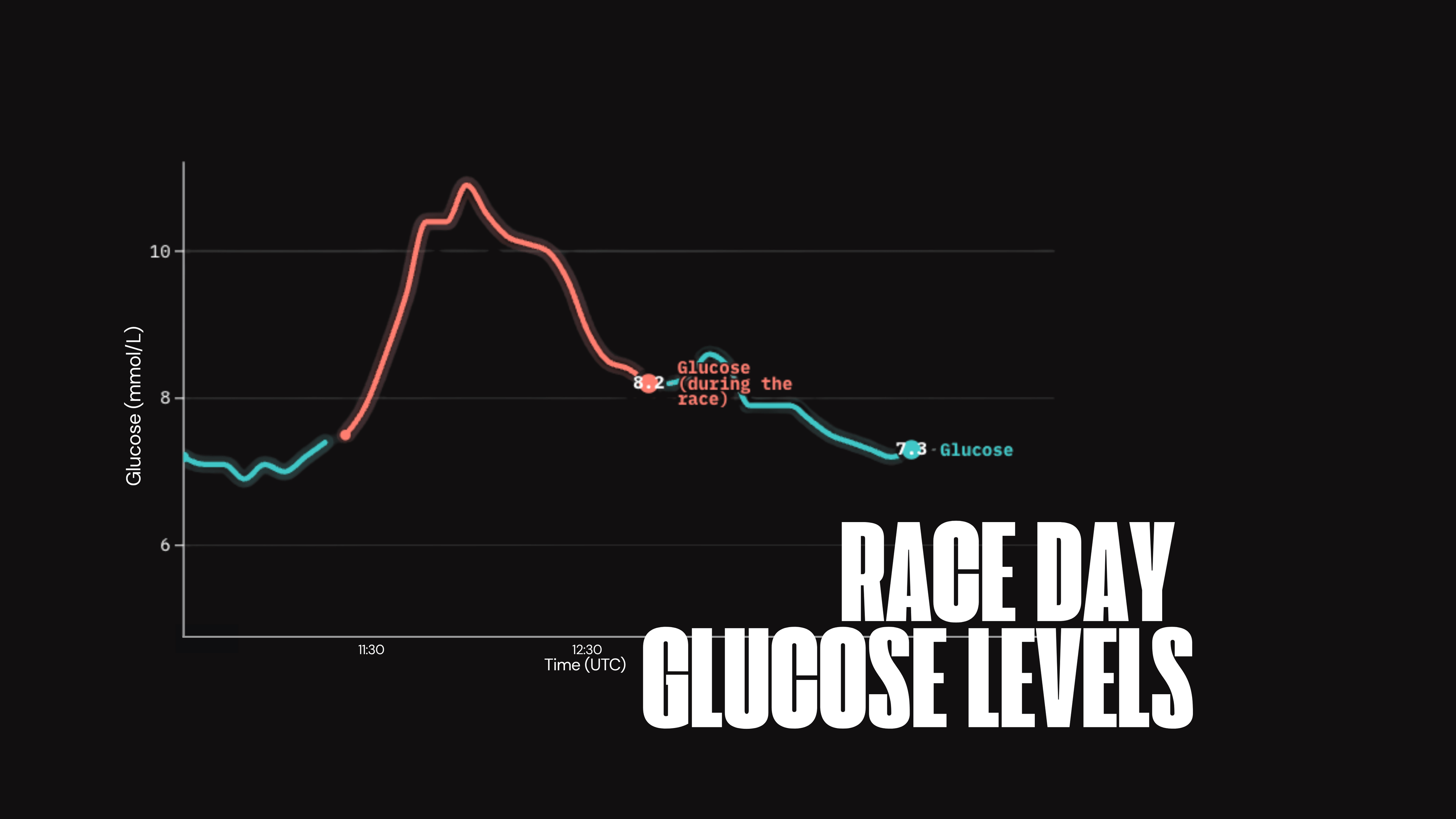
Carbohydrate gels have become almost synonymous with endurance sport. Walk through the warm-up area at any major race and you’ll see athletes with pockets full of them.
But are they actually necessary for a race like Hyrox?
The answer isn’t a simple yes or no. It depends on how your body fuels exercise, how well you prepared in the days before the race, and how long or intense the event is for you personally.
One of the most powerful ways to understand this is by looking at continuous glucose data during competition.
Looking at the entire timeline helps reveal how the body prepares, mobilises and uses carbohydrate during competition.
Why Glucose Matters During Exercise
Glucose is one of the primary fuels for high-intensity exercise.
When you perform intense work — like sled pushes, burpees or running intervals — your muscles rely heavily on carbohydrate metabolism. That carbohydrate comes from two main sources:
Glycogen stored in muscles
Glucose circulating in the bloodstream
The liver plays a key role in maintaining blood glucose levels during exercise by breaking down glycogen and releasing glucose into circulation.
The balance between:
Glucose entering the bloodstream (appearance)
Glucose being used by muscles (utilisation)
is what determines whether blood glucose rises, falls or stays stable during exercise.
Continuous glucose monitoring allows us to see how this balance changes throughout a race.
What Typically Happens to Glucose During Intense Exercise
During the early stages of intense competition, glucose often rises sharply.
This happens because the body enters a stress-response state:
Adrenaline increases
Glucagon increases
Insulin decreases
These hormonal signals stimulate the liver to break down glycogen and release glucose into the bloodstream.
Essentially, the body anticipates high energy demand and floods the system with available fuel.
For athletes, this early rise in glucose is generally a positive sign. It indicates that the body is mobilising energy effectively to support performance.
Why Glucose May Fall Later in the Race
As exercise continues, working muscles begin pulling glucose out of the bloodstream very efficiently.
This occurs through a mechanism called contraction-mediated glucose uptake, where muscle contractions activate glucose transporters (GLUT4) that move glucose into muscle cells without requiring insulin.
If muscle uptake becomes greater than the rate at which glucose enters the bloodstream from the liver, blood glucose levels will begin to gradually decline.
Importantly, this does not necessarily mean the athlete is running out of fuel.
It simply means that:
The muscles are currently using glucose faster than it is appearing in circulation.
As long as glucose levels remain within a healthy range, this is a normal and expected physiological response.
What Glucose Data Can Reveal During a Race
Looking at glucose trends during an event can reveal several important things:
1. Whether the body has adequate carbohydrate availability
If glucose remains relatively stable or elevated during competition, it suggests that glycogen stores were likely sufficient.
If glucose falls rapidly or approaches low levels, it may indicate that carbohydrate availability is becoming limited.
2. How well the athlete prepared nutritionally
Carbohydrate intake in the 24–48 hours before a race strongly influences glycogen stores. Well-prepared athletes often show more stable glucose profiles during competition.
3. Whether additional fuelling may help
Some athletes may benefit from carbohydrate intake during longer or more demanding events. Glucose monitoring can help identify when fuelling strategies actually support performance rather than relying on guesswork.
Why the Answer Isn’t the Same for Everyone
A key misconception in sports nutrition is that there is a universal fuelling strategy.
In reality, several factors influence whether an athlete may benefit from carbohydrate intake during a race.
Race Duration
Carbohydrate intake becomes more important as event duration increases.
For events lasting:
Under ~70-90 minutes: glycogen stores are often sufficient if properly loaded beforehand
90+ minutes: external carbohydrate intake becomes increasingly beneficial
Hyrox sits near the border of this range, with most athletes finishing around 90 minutes, though some races last longer.
Exercise Intensity
Higher intensity exercise relies more heavily on carbohydrate metabolism.
Athletes pushing at extremely high intensities may deplete glycogen faster, potentially increasing the value of mid-race fuelling.
Pre-Race Nutrition
Carbohydrate intake in the days leading up to a race significantly affects glycogen availability.
Athletes who have not adequately carb-loaded may begin competition with lower reserves, making additional carbohydrate during the race more useful.
Individual Metabolic Differences
Athletes vary in:
Glycogen storage capacity
Fat oxidation efficiency
Glucose regulation
Gastrointestinal tolerance to fuelling during exercise
These differences mean that strategies that work well for one athlete may not work for another.
Why Measuring Physiology Matters
Traditionally, athletes have relied on general nutrition guidelines developed from population averages.
While these guidelines are useful starting points, they cannot account for individual variation.
Continuous biomarker monitoring — including glucose — allows athletes to understand how their own physiology responds to training and competition.
With this information, fuelling strategies can shift from being:
generic recommendations → personalised decisions
Athletes can identify:
Whether glucose availability ever becomes limiting
How different pre-race nutrition strategies affect performance
When additional carbohydrate might actually be beneficial
The Key Takeaway
Whether you need a glucose gel during a Hyrox race depends on multiple factors:
race duration
exercise intensity
glycogen availability
pre-race nutrition
individual metabolic responses
For many athletes competing in a well-prepared 50–90 minute race, glycogen stores may already be sufficient to maintain glucose availability throughout the event.
But the only way to truly understand your fuelling needs is to measure what your body is doing.
When athletes can see their physiology in real time, fuelling decisions become far more precise — and performance strategies become far more effective. Sign up to our mailing list for the latest updates!