

Founder Endurance & Performance
What We Learned from Olympians, Scientists and Investors
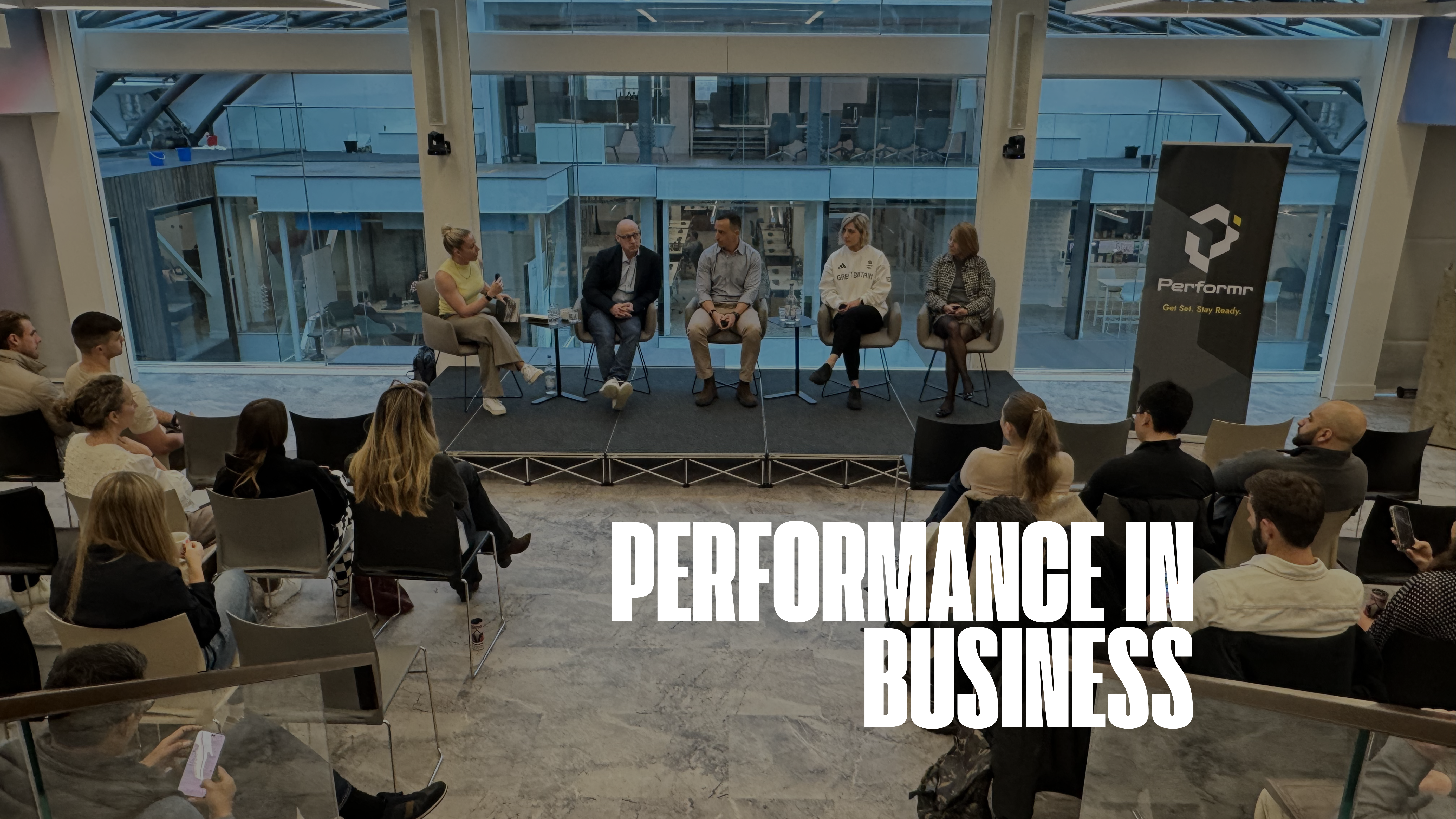
On 27th March 2026, we brought together a panel of elite performers, sports scientists and investors to tackle that question. The conversation cut across rugby pitches, Olympic platforms, scientific laboratories and venture boardrooms, but the conclusions were strikingly consistent.
Building a company is one of the most physiologically demanding things a person can do. The founders who go the distance treat their own performance with the same rigour an Olympic athlete brings to theirs.
The Panel
Itxaso del Palacio - General Partner, Notion Capital
Prof. Graeme Close - Head of Research, Liverpool John Moores University Institute for Sport and Exercise Sciences. Performance nutritionist to the British and Irish Lions and the DP World Tour
Emily Muskett OLY - Olympian, European and World medallist, GB Weightlifting Performance Pathway Manager
Dr David Lipman - Health and human performance specialist, performance and wearables industry
Dr Louise Blair - Co-Founder and Chief Scientific Officer, Performr
The Core Equation
If there's one line to take away from the evening, it's this:
High Performance = Energy + Recovery + Consistency
Everything else is a way of operationalising those three variables. Here's how the panel suggested founders do it.
1. Build Awareness Before You Build Anything Else
You can't manage what you can't see. The earliest signs of founder burnout are subtle: increased cynicism, irritability, mood shifts. They're notoriously hard to spot in yourself, which is why the panel was unanimous on one point, lean on the people around you. Co-founders, partners and trusted peers will see the dip before you do.
Underneath the behavioural signs sit physiological ones. Declining heart rate variability (HRV), a rising resting heart rate, and disrupted sleep, whether you're suddenly sleeping far more or far less, are early warning lights. Tracking these simple markers gives founders a way to act before a dip becomes a crash.
2. Periodise Your Day Like an Athlete
Elite athletes don't simply train harder than everyone else. They build recovery into their schedule with the same discipline they bring to training. Founders, by contrast, often run their calendars like a pure-output exercise: meeting, meeting, meeting, repeat.
The panel's prescription was practical:
Avoid back-to-back meetings wherever possible
Schedule 10–20 minute recovery windows directly into the diary: for breathwork, a walk, or simply stepping away from the screen
Alternate between mental and physical effort across the day rather than sitting still for eight hours
Small resets compound. Sustained performance is built from them.
3. Make Sleep Non-Negotiable
Sleep is when short-term learning consolidates into long-term memory. It is, in a very literal sense, when your strategic thinking gets filed away. Protect it: stop eating well before bed, avoid screens for at least an hour beforehand, and resist the temptation to send "one more email" late at night. Prioritise sleep quality over hours worked. Better sleep produces better decisions and better decisions are the only output that really matters.
4. Keep Nutrition Boringly Effective
Prof. Graeme Close was emphatic: don't overcomplicate it. Build meals around vegetables, quality protein and fibre. Reduce reliance on caffeine and convenience food to power through. Prepare your own meals where you can.
One simple tip with disproportionate impact: walk briefly before eating. Even a short walk meaningfully improves insulin response, glucose management and afternoon cognitive performance.
Ignore the fad diets and peptide trends. The fundamentals haven't changed in decades.
5. Treat Recovery as a System, Not a Luxury
Recovery isn't something you earn after burning out. It's the system that prevents burnout in the first place. The panel suggested thinking of it as a points menu, combining bigger and smaller actions across a week:
Big: rest days, massage, cold exposure
Small: walks, breathwork, cooking from scratch, time with loved ones
After a demanding day, the goal is to "hit 100 points" by stacking several of these. The crucial caveat: find what you genuinely enjoy. The cognitive appraisal of a recovery activity matters. If you hate cold plunges, they won't deliver the benefit. Consistency beats intensity, every time.
6. Use Breathwork as a Fast Reset
Six seconds in, six seconds out, ten times. That's it. Simple breathing patterns can meaningfully reshape your physiology in minutes.
For high-pressure moments, a board meeting, a difficult call, an investor pitch, elite performers use the "recovery breath": a big inhale, a second sharp inhale on top, then a long, slow exhale. It calms the nervous system fast. Minimal time investment, significant return.
7. Focus on Process, Not Outcome
Outcomes are noisy. They're shaped by markets, timing, luck and hundreds of variables outside your control. Define winning by what you can control:
Decision quality
Speed of execution
Quality of preparation
Founders who use failure as fuel to keep testing and iterating consistently outperform those paralysed by the fear of failing again. Process focus builds resilience and momentum where outcome obsession erodes both.
8. Don't Try to Do It Alone
The founders who cope best lean on support networks: family, mentors, coaches, co-founders. Later-stage founders with trusted teams around them report measurably better mental and physical wellbeing than early-stage founders doing everything themselves.
The panel noted a specific gender dynamic worth flagging — women tend to maintain stronger social support structures, while men tend to isolate more under stress. If that pattern sounds familiar, treat it as a signal.
9. Lead the Culture You Want to See
Your team is watching you. If you say there are no emails after 6pm, don't send one at 7pm. Culture is the hardest thing to build and the easiest thing to destroy, a single exception undermines it.
Align incentives so you're rewarding healthy behaviour, not just raw output. Consider a regular shared physical activity (a midweek group workout, for instance) with no skill-level expectation. Culture is shaped by what you do, not what you say.
10. Remember: Stress is Contagious
Moods and stress spread through teams faster than founders typically realise. As a leader, self-regulation isn't a personal nicety, it's a leadership tool. You need to be the calm presence in chaotic moments. Put your own oxygen mask on first, but recognise that your state sets the tone for everyone around you.
11. Play the Long Game
Plan your recovery and wellbeing deliberately. Don't leave it to chance. Even 20–30 minutes a day makes a real difference over time. Adapt your routines as life evolves — what works for a seed-stage founder won't work for a Series B CEO with two kids. Find genuine enjoyment in the work itself; high-performing environments have more laughter than outsiders expect. And when you're with the people you care about, be fully present. Put the phone away.
Endurance is a competitive advantage. The founders who treat it that way are the ones still building, and still enjoying it, a decade in.
Thank you to Notion Capital and HSBC Innovation Banking for partnering with us on the evening, and to our exceptional panel for their generosity and insight.
At Performr, we're building the wearable biosensor platform that gives founders, athletes and high performers the physiological data they need to put these principles into practice.