

Designed Around the Athlete
The Balancing Act Behind Every Version of the Performr Band
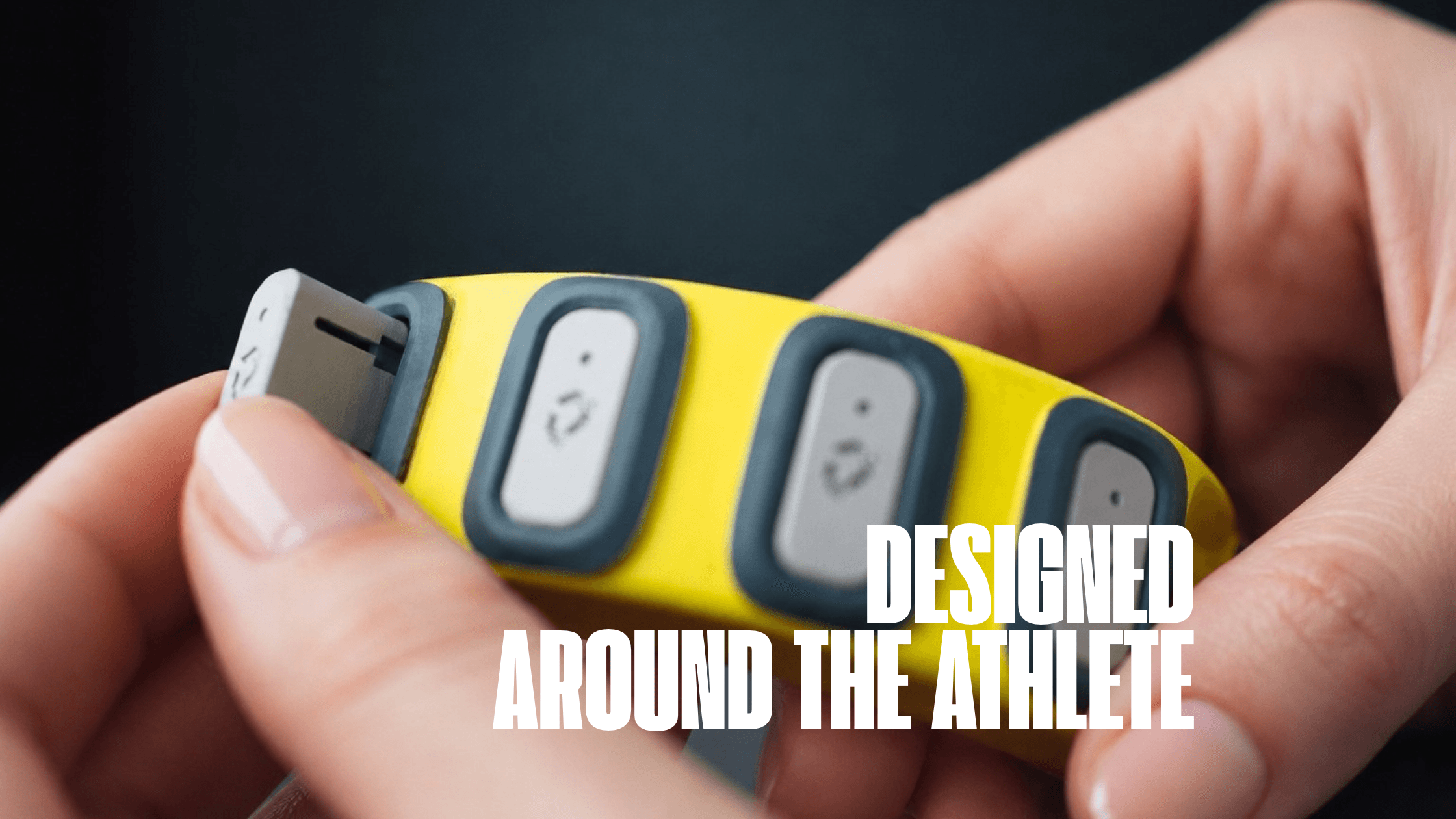
Building a wearable for athletes is a fascinating design puzzle. Every decision, from the size of a sensor to the shape of the strap, has to serve three goals at once: great performance, cutting-edge technology and real comfort for the person wearing it. Each new version of the Performr band is about bringing those three goals closer together, so athletes get clean, reliable data from a device they genuinely want to wear.
Miniaturisation
Smaller is almost always better on the body. A compact device is lighter, doesn't catch on equipment, and is easier to forget about. But every component we shrink comes with an engineering challenge. Sensors need enough surface area to read reliably, batteries need volume to last for multiple days, and electronics need room to process data and stay connected.
That's where smart design comes in. Rather than simply making everything smaller, we focus on what genuinely needs to sit on the body. Our modular approach keeps the core sensing close to the skin, while everything around it is designed to be as slim and light as possible.
Placement on the body
Where a wearable sits shapes everything: the quality of the signal, how stable it stays, and how it feels. The goal is a spot that gives excellent sensing conditions while staying out of the way of a barbell, a rowing handle or a rope climb.
Because athletes don't train in just one way, the right placement has to work across the whole training week. That's why we test across a wide range of disciplines, from steady running to wall balls and sled pushes, finding the position where the band stays secure, the signal stays strong and the athlete barely notices it.
Comfort
Comfort is what turns a great device into one people actually wear. Continuous monitoring delivers the most value when the band stays on through long sessions, hot days and overnight recovery, so it needs to feel like part of your kit rather than something you're conscious of.
The art is in balancing a secure fit, which keeps the sensors in steady contact with the skin, with a feel that's light and unobtrusive. We refine materials, shape, weight distribution and fastening with every iteration, and test each change with athletes under real training load.
The other things we design for
Beyond those three, every version of the band is shaped by a wider set of priorities:
Sweat and water: built to handle heavy sweat, rain and washing, and keep sensing reliably through all of it.
Skin-friendly materials: gentle enough for many hours of wear, including for people with sensitive skin.
Clean signals in motion: designed to keep biomarker readings clear through high-impact, multi-directional movement.
Battery life: enough to last for multiple days of training, racing and recovery between charges.
Durability: tough enough for knocks against rigs, sleds, kettlebells and the floor.
Fit for every body: the same quality of data across different arm sizes, body shapes and skin types.
Everyday practicality: easy to clean, quick to put on, and simple to recharge.
Competition-ready: designed to be worn where athletes actually race.
Data you can trust: accurate readings, handled with care and respect for privacy.
Built with athletes, not just for them
The best way to design for athletes is to design with them. Every version of the band goes onto people who push their bodies hard, and their feedback, alongside the data, shapes what comes next. From triathlon, running, hybrid fitness races to CrossFit sessions, every round of testing moves the design forward.
The goal is a band that disappears on the body while delivering the clearest possible picture of what's happening inside it, and each iteration brings us closer.
Want to stay on top of posts like this — and be among the first to see what continuous, multi-marker monitoring can reveal? Join the Performr waitlist to keep up with the latest insights, product news and training science from the team.